If you’re considering epoxy flooring for your home or business, one of the first questions you’ll probably ask is: How much does epoxy flooring cost in Sydney?
At NSW Epoxy Flooring, our flooring services range from $40 to $150 per square metre, depending on the flooring system, the condition of the existing concrete, the size of the area and the requirements of the project.
We provide flooring solutions for garages, driveways, workshops, warehouses, commercial kitchens, salons, offices, showrooms and other residential and commercial spaces.
In this guide, we explain the main factors that affect epoxy flooring costs, compare different flooring systems and help you understand what to consider before requesting a quote.
1. How Much Does Epoxy Flooring Cost Per Square Metre?
At NSW Epoxy Flooring, our service pricing generally ranges from $40 to $150 per m². The final price depends on the flooring system selected and the preparation and installation requirements of your project.
Here are some of the flooring options we provide:
- – Simple solid-colour epoxy flooring: A practical option for workshops, garages and selected commercial or industrial areas where a clean, uniform finish is required.
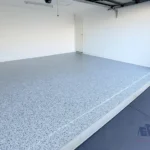
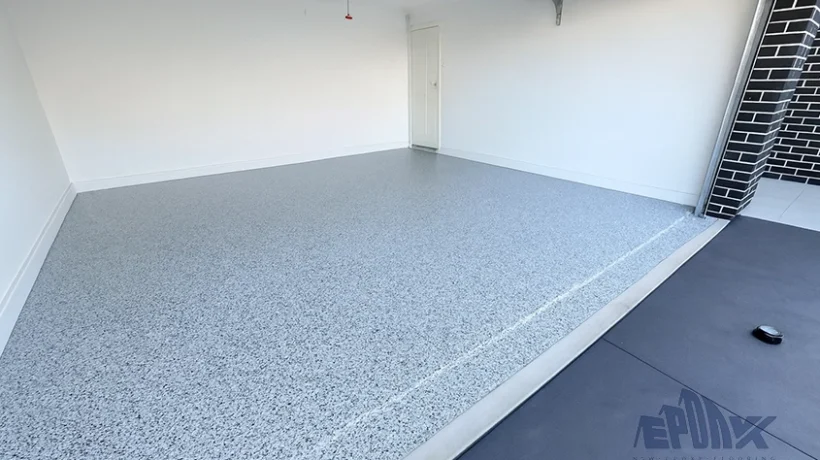
- – Decorative flake epoxy flooring: A popular choice for residential garages and other areas where appearance, durability and ease of maintenance are important. A UV-resistant polyaspartic clear topcoat sealer is also available upon request.
- – Decorative metallic epoxy flooring: A distinctive flooring option for salons, offices, showrooms and other interiors where a decorative finish is desired.
- – Polyurethane cement (PUC) flooring: A heavy-duty flooring system suitable for demanding environments such as commercial kitchens and food processing facilities, subject to the project’s requirements.
- Outdoor decorative flake flooring: A flooring solution for suitable driveways and outdoor areas, designed to withstand exposure to sunlight and rain when installed under appropriate site conditions.
These are different systems designed for different purposes, so the most suitable option depends on how the floor will be used. The price per square metre may also vary depending on the amount of preparation and any additional work required.
2. What Factors Affect the Cost of Epoxy Flooring?
Several factors can influence the final cost of your flooring project.
Type of Flooring System
Different flooring systems require different materials, application methods and installation processes.
For example, a simple solid-colour epoxy floor may have different requirements from a decorative flake system or a metallic epoxy finish. Polyurethane cement flooring is designed for demanding environments and may require additional preparation and specialist application.
Choosing the right system for your space is important for both performance and long-term value.
Size of the Area
The total floor area affects the overall project cost. Larger areas may benefit from efficiencies in preparation and installation, although the final price still depends on the flooring system and site requirements.
For smaller areas, minimum project charges may apply because equipment, materials and labour are still required regardless of the floor size.
Condition of the Existing Concrete
Concrete preparation is an essential part of a successful epoxy flooring installation.
Before applying the coating, the concrete generally needs to be mechanically ground to create a suitable surface for bonding. Cracks, holes, chips, uneven areas and other defects may require additional repairs.
Moisture issues can also affect the choice of flooring system and may require further assessment or a suitable moisture barrier.
The condition of your existing concrete can therefore have a significant impact on the final quote.
Intended Use of the Floor
The flooring requirements for a residential garage are different from those for a commercial kitchen, warehouse or food processing facility.
For example:
- – Garages may require a durable finish that is easy to clean and resistant to everyday wear.
- – Workshops and warehouses may require a coating suitable for regular foot traffic, equipment and operational demands.
- – Commercial kitchens may require a specialised system designed for wet conditions, cleaning procedures and demanding hygiene requirements.
- – Salons, offices and showrooms may place greater emphasis on appearance and the overall interior design.
Selecting a system that suits the intended use of the space helps avoid choosing a floor that may not perform as required.
Additional Requirements
Some projects require additional work or materials, which can affect the final price. Depending on the site, these may include:
- – Concrete crack and surface repairs
- – Moisture barriers
- – Non-slip finishes
- – Coving at wall-to-floor junctions
- – Falls to floor drains
- – Specialised flooring systems for commercial kitchens
- – UV-resistant clear topcoat sealers for suitable decorative flake systems
Not every project requires these additions. Your flooring specialist can assess the site and explain which items are necessary.
3. Which Flooring System Is Best for Your Property or Business?
The best flooring system depends on your budget, the condition of the concrete, the appearance you want and how the area will be used.
Decorative Flake Flooring for Garages
Decorative flake epoxy flooring is a popular option for residential garages. It combines a coloured base coat with decorative flakes and protective clear coats to create a textured, multi-colour finish.
Benefits include:
- – A decorative finish available in different colour combinations
- – A durable surface suitable for everyday garage use
- – A floor that is generally easy to clean and maintain
- – The option to select a design that complements your property
For suitable outdoor or UV-exposed applications, an appropriate system and clear topcoat sealer should be selected based on the site conditions.
Solid-Colour Epoxy Flooring for Workshops and Industrial Areas
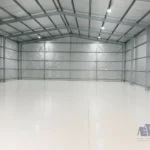
Solid-colour epoxy flooring provides a uniform finish and is often considered for workshops, storage areas and selected industrial or commercial spaces.
It can be a practical option where a consistent appearance and a surface that is easier to clean are priorities. The appropriate system depends on the level of traffic, the condition of the concrete and the operational requirements of the space.
Metallic Epoxy Flooring for Salons, Offices and Showrooms
Metallic epoxy flooring creates a distinctive decorative finish with flowing patterns and variations in appearance.
It may be suitable for salons, offices, showrooms and other interior spaces where the floor is an important part of the overall design.
Because metallic finishes are decorative, the final appearance depends on the chosen colours, application technique, lighting and the condition of the underlying surface.
Polyurethane Cement Flooring for Commercial Kitchens
Commercial kitchens and food processing facilities often require a specialised flooring system that can withstand demanding operating conditions.
Polyurethane cement (PUC) flooring is designed for environments where factors such as moisture, regular cleaning, temperature changes and operational wear need to be considered.
Depending on the project, the flooring design may also need to accommodate:
- – Non-slip requirements
- – Falls towards floor drains
- – Coving at wall-to-floor junctions
- – Moisture conditions in the concrete
- – The cleaning procedures and operating environment
The most suitable system should be determined after assessing the site’s requirements.
Epoxy Flooring for Driveways and Outdoor Areas
Driveways and outdoor areas require careful consideration of UV exposure, weather conditions, surface preparation and the suitability of the selected coating system.
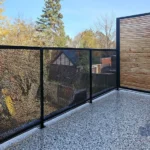
Decorative flake flooring may be suitable for certain outdoor applications when installed using an appropriate system.
Outdoor installation also depends on suitable weather conditions during application and curing. Your flooring specialist can advise whether the proposed system is appropriate for your driveway or outdoor area.
4. Does a Cheaper Epoxy Floor Mean Better Value?
Not necessarily.
The cheapest quote may not include the same preparation, materials or finishing process as another quote. Comparing prices alone can make it difficult to determine which option offers better value.
Before choosing a contractor, consider the following:
- – Concrete preparation: Is mechanical grinding included?
- – Repairs: Are cracks, holes and surface defects included, or are they charged separately?
- – Flooring system: Are you comparing the same type of coating and finish?
- – Protective coats: How many coats are included, and what products will be used?
- – Suitability: Is the proposed system appropriate for your property’s conditions and intended use?
- – Warranty: What workmanship warranty is offered, and what work does it cover?
- – Written quote: Are the scope of work, inclusions and exclusions clearly explained?
Proper preparation and the right flooring system are important to the performance of the finished floor. A quote should make it clear what you are paying for, rather than focusing only on the price per square metre.
5. How Can You Get an Accurate Epoxy Flooring Quote?
The most reliable way to obtain an accurate quote is to provide information about the area and arrange an inspection where necessary.
To help us assess your project, you can provide:
- 1. The approximate floor area: Let us know the length and width, or the total area in square metres if known.
- 2. Photos or videos: These can help us understand the existing floor and the general condition of the concrete.
- 3. The intended use: Tell us whether the area is a garage, driveway, workshop, warehouse, commercial kitchen or another type of space.
- 4. Your preferred finish: Let us know whether you are considering solid-colour epoxy, decorative flake, metallic epoxy or polyurethane cement flooring.
- 5. Site conditions: Mention any cracks, damaged concrete, moisture concerns, drainage requirements or access restrictions.
For larger areas or projects with specialised requirements, an onsite inspection may be necessary to assess the concrete, take measurements and determine the most suitable flooring system.
At NSW Epoxy Flooring, we can discuss the available options and provide a quote based on your project’s specific requirements.
6. Why Choose NSW Epoxy Flooring?
NSW Epoxy Flooring provides flooring solutions for residential, commercial and industrial applications across Greater Sydney and surrounding suburbs.
We understand that every project is different. Our approach is to consider the condition of the concrete, the intended use of the space and the finish required before recommending a suitable flooring system.
When you contact us, we can help you understand:
- – Which flooring system may suit your project
- – What concrete preparation is required
- – Whether additional repairs or treatments may be necessary
- – Which finish and colour options are available
- – What is included in your quote
Our goal is to provide a flooring solution that suits the requirements of your property or business, with a clear explanation of the proposed work.
Frequently Asked Questions
How much does epoxy flooring cost in Sydney in 2026?
NSW Epoxy Flooring’s service pricing generally ranges from $40 to $150 per square metre. The final cost depends on the selected flooring system, the floor area, concrete condition and any additional requirements.
What is the cheapest type of epoxy flooring?
Simple solid-colour epoxy may be a more economical option for some projects than decorative systems. However, the final price depends on the preparation required, the size of the area and the intended use of the floor.
Is decorative flake flooring suitable for garages?
Yes. Decorative flake flooring is a popular choice for residential garages because it offers a decorative finish and a surface that is generally easy to clean and maintain. The appropriate system depends on the concrete condition and how the garage will be used.
Is epoxy flooring suitable for commercial kitchens?
Some epoxy systems may be suitable for particular commercial applications, but demanding kitchen environments may require a specialised system. Polyurethane cement (PUC) flooring is commonly considered for commercial kitchens and food processing facilities because it is designed for demanding conditions. The final specification should be based on the site’s operating requirements.
Can I add a UV-resistant sealer to decorative flake flooring?
For suitable decorative flake applications, a UV-resistant polyaspartic clear topcoat sealer may be available as an additional option. The appropriate coating system depends on whether the floor is indoors or outdoors and the expected exposure conditions.
Does the quote include concrete grinding?
Concrete grinding is an essential part of our epoxy flooring installation process. The quote should clarify the preparation included and whether additional repairs, moisture treatment or other work will be required.
How do I get a quote from NSW Epoxy Flooring?
You can contact us with the approximate floor area, photos of the existing concrete, your location and the intended use of the space. For larger or more complex projects, an onsite inspection may be required to provide an accurate quote.
Get a Quote for Your Epoxy Flooring Project
Whether you need flooring for a residential garage, driveway, workshop, warehouse, commercial kitchen, salon, office or showroom, NSW Epoxy Flooring can help you explore the available options.
Our flooring services range from $40 to $150 per square metre, depending on the system and project requirements.
If you’re looking for a reliable epoxy flooring solution in Greater Sydney area, NSW Epoxy Flooring is here to help.